
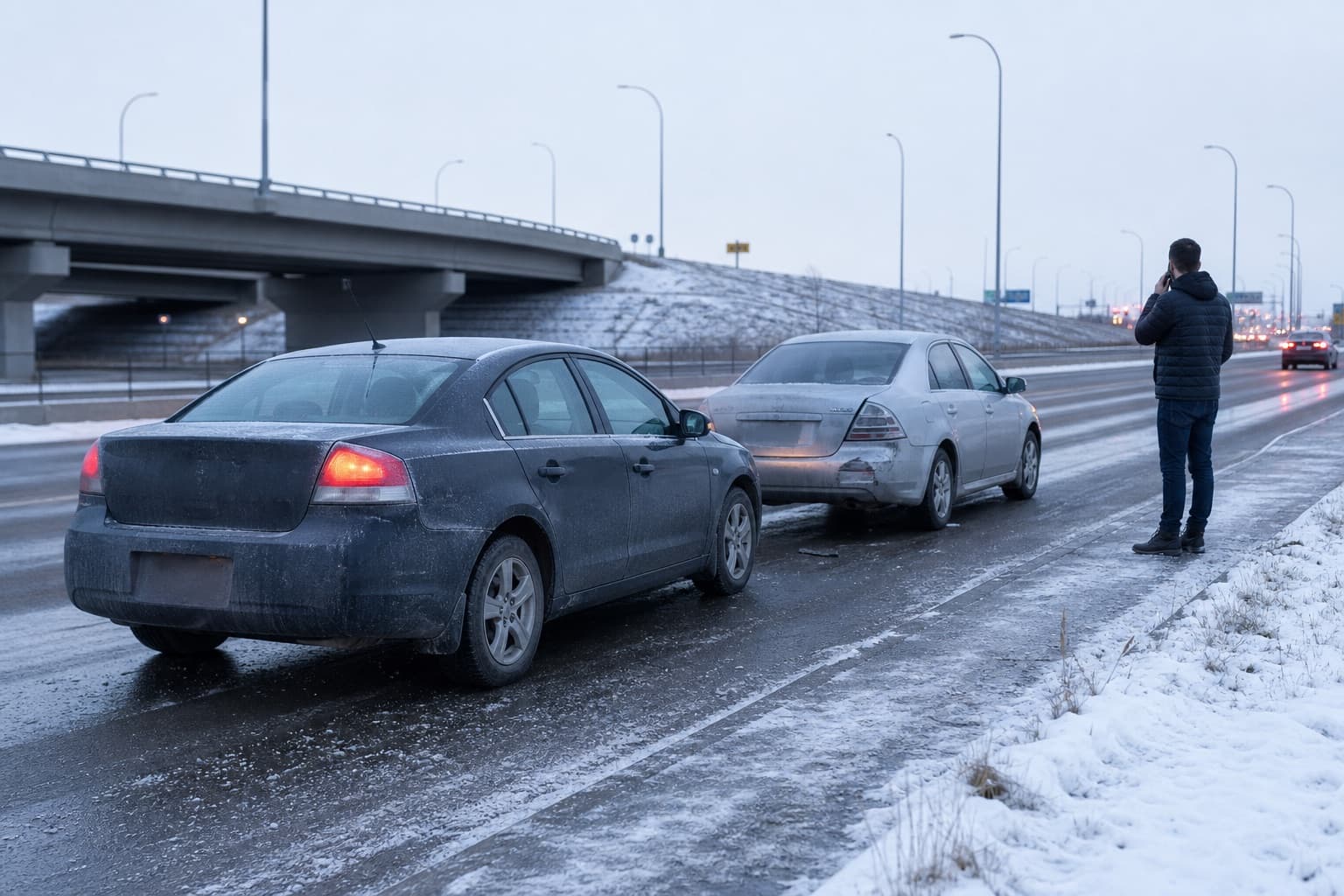
Ask anyone who drives Deerfoot or Barlow Trail through October and November, and they'll tell you the same thing: the first cold snap always catches a few people off guard. The roads look dry, then a shaded overpass turns into black ice, and suddenly you're dealing with a fender bender you didn't see coming. Our Forest Lawn clinic is close enough to some of that southeast traffic that we see the pattern every year almost like clockwork — collision numbers climb the moment temperatures start dipping below zero overnight.
If you've just been in one of those accidents, or you're bracing for the season, here's what's actually useful to know.
Why Crashes Pick Up Once the Roads Get Slick
A few things stack up against Calgary drivers this time of year. The freeze-thaw cycle we're famous for — mild Chinook afternoons followed by overnight refreezing — creates ice patches that aren't visible until you're already on them. Days get shorter, so more of the evening commute happens in the dark. And every year, there's a stretch of a few weeks where drivers simply haven't recalibrated their following distance and braking habits for winter conditions yet.
None of that makes an accident your fault or anyone's fault in particular — it's just the reality of driving in this city for part of the year, and it's why we tend to see a real uptick in accident-related physiotherapy visits starting in October.
Why You Might Feel “Fine” at First — and Then Not
This is the part that catches a lot of people off guard, and it's worth saying clearly: it's genuinely common to walk away from a low-speed collision feeling more shaken than sore, only to wake up the next morning barely able to turn your head.
Whiplash and soft tissue strain don't always announce themselves right away. The adrenaline from the collision itself can mask pain for the first few hours, and inflammation in the neck, shoulders, or lower back often builds gradually over 24 to 72 hours. Headaches, stiffness, and a general sense of being “off” are also common after impact, even in accidents that didn't seem severe at the time.
If you felt okay right after a crash but you're stiff, sore, or getting headaches a day or two later, that's not unusual — and it's a good reason to get checked rather than wait it out. Learn more about our approach to neck pain physiotherapy in Calgary.
What to Do in the Days After a Collision
- Make sure everyone's safety is handled first — that means the usual: exchange information, document the scene with photos, and get medical attention right away if anything feels seriously wrong.
- See your doctor or a walk-in clinic if you haven't already, especially for anything that could involve a more serious injury.
- Don't wait for pain to become unbearable before booking physiotherapy. Early assessment and movement, guided properly, tends to lead to a smoother recovery than waiting weeks to see if things resolve on their own.
- Keep your insurance details handy for your first physiotherapy visit — our front desk team can walk you through what's typically covered and handle direct billing on your behalf.
One honest note: we're physiotherapists, not lawyers or claims adjusters, so for anything specific to your accident benefits or a claim in progress, it's worth checking directly with your insurer or a legal professional. Alberta's current automobile collision and insurance guidance explains reporting and accident-benefit steps; rules are changing in 2027, so confirm claim-specific details with your insurer. We're happy to provide clear documentation of your treatment to support whatever process you're going through.
How Physiotherapy Fits Into Your Recovery
In Alberta, you don't need a doctor's referral to start physiotherapy after a car accident — physiotherapists are direct-access providers, so you can book directly with us. A first visit usually includes a thorough history of the accident and your symptoms, a physical assessment of your neck, back, and any other affected areas, and a treatment plan built around what's actually going on for you, not a one-size-fits-all protocol.
Depending on what we find, that might include manual therapy to ease stiffness and restore movement, a graded exercise program to rebuild strength safely, and practical guidance on sleep positions, posture, and daily activities while you're healing. We'll also keep clear records throughout your treatment, which tends to matter later if you're working through an insurance claim.
Our Forest Lawn clinic sits close to the Deerfoot and Barlow Trail corridor, which makes it a convenient stop for a lot of southeast Calgary drivers dealing with exactly this kind of injury.
If you've been in a collision recently — even one that felt minor — it's worth getting assessed before symptoms have a chance to settle in.
Book an MVA assessment at Spectrum Physiotherapy — no referral needed, direct billing available.
Frequently Asked Questions
Do I need a referral to start physiotherapy after a car accident in Calgary?
No. Physiotherapists in Alberta can be seen directly without a doctor's referral, so you can book an assessment as soon as you're ready.
How soon after an accident should I start physiotherapy?
Generally, sooner is better once any more serious injuries have been ruled out by a doctor. Early, appropriately guided movement tends to support a smoother recovery than waiting to see if symptoms resolve on their own.
Will physiotherapy affect my insurance claim?
We can't advise on the specifics of any individual claim, but we do provide clear documentation of your assessment and treatment, which is often useful for whatever process you're navigating. For claim-specific questions, your insurer or a legal professional will have the most accurate answer.
What if I felt fine right after the accident but I'm sore now?
That's a very common pattern with whiplash and soft tissue injuries — symptoms often build over the first day or two rather than appearing immediately. It's still worth getting assessed.
This article is intended for general educational purposes and isn't a substitute for individual medical or legal advice. If you've been in an accident, please seek appropriate medical attention and speak with your insurer or a legal professional about your specific situation.