
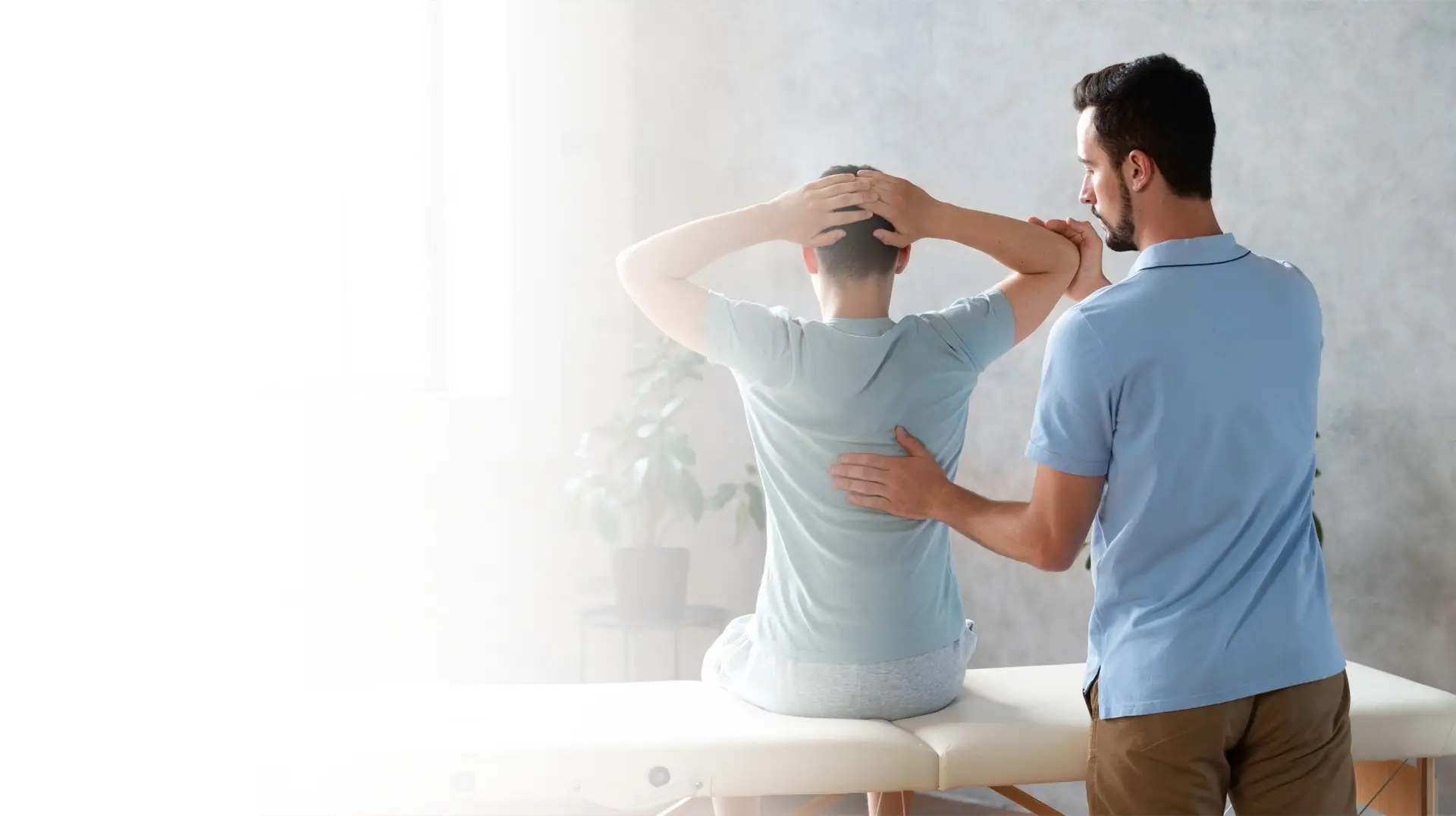
Osteoarthritis is one of the most common forms of arthritis, causing joint pain, stiffness, and reduced mobility. It occurs when the protective cartilage that cushions your bones wears down over time, leading to discomfort and inflammation. Early diagnosis and physiotherapy can help manage symptoms and maintain an active lifestyle.
What is Osteoarthritis?+
Osteoarthritis (OA), also called degenerative arthritis, is a joint-disease where the cushioning cartilage between bones breaks down, becomes rough and less effective. In a healthy joint, the cartilage acts as a smooth barrier allowing the bones to glide. With osteoarthritis the cartilage deteriorates, the joint space narrows and bones may even rub together or form bone spurs. It can affect any joint in the body, including the spine (lower back and neck) and hips, knees, wrists, hands and feet.
Signs & Symptoms
The symptoms of osteoarthritis and how it progresses include:
- Joint pain, aching or soreness - especially during or after activity.
- Stiffness after resting or first thing in the morning; also after inactivity.
- Loss of motion or inability to move the joint through full range.
- Swelling/inflammation inside the joint.
- Grinding, creaking or a “crunching” feeling (crepitus) when the joint moves.
- In the spine (including lower back), osteoarthritis can contribute to pain, stiffness and reduced mobility in that area.
Which Joints Are Affected?+
In particular when the spine is involved, one might experience lower back pain and stiffness – and this can overlap or co-exist with issues like a lower back sprain. It’s therefore useful to understand how “lower back sprain treatment” and osteoarthritis management differ and align.
Osteoarthritis can strike many parts of the body — most commonly:
- Knees
- Hips
- Neck and spine (including the lower back)
- Hands/fingers/thumbs
- Wrists, elbows
- Ankles & feet
Risk Factors & How It Develops
The breakdown of cartilage is central to osteoarthritis, but several factors increase the risk or speed of progression:
- Age - wear and tear accumulates over years.
- Previous joint injury (including sprains, strains) which may leave the joint more vulnerable.
- Obesity or excess weight increases load and stress on joints.
- Weak muscles around the joint, poor joint alignment or joint overuse.
- In the spine: repetitive stress, poor posture or past sprain/strain can contribute to degenerative changes.
While a “lower back sprain” typically refers to acute injury of muscles, ligaments or tendons in the lumbar spine region, osteoarthritis in the lower spine involves degenerative changes of the joints between vertebrae (facet joints) or discs. Both conditions can result in lower back pain, stiffness and reduced mobility.
Lower back sprain treatment often focuses on rest, anti-inflammatories, gradual movement, strengthening and flexibility of the lumbar muscles and ligaments.
Osteoarthritis treatment for the lower back includes similar components (strength, mobility, pain control) but also addresses the chronic degenerative changes in the joint and cartilage.
Hence, treatment programmes should be tailored — if someone has osteoarthritis in the lower back and a sprain, management must cover both the acute injury component (sprain) and the longer-term joint degeneration (osteoarthritis and treatment) issues.
How Is Osteoarthritis Treated?+
There is no full “cure” for osteoarthritis, but effective management and treatment strategies exist – especially when caught early. Key goals are to reduce pain, maintain or increase joint mobility, preserve or build strength, and slow progression of the joint changes.
Treatment Breakdown
Assessment
A physiotherapist examines pain level, swelling, joint strength, flexibility, range of motion and baseline mobility.
Exercise prescription
Targeted exercises to increase strength (especially of muscles around affected joints), improve flexibility and mobility. Aerobic exercise plus resistance training are shown to help.
Manual therapy & modalities
Techniques like joint mobilisation, massage, mobilising movement may be used to keep joints supple and reduce stiffness.
Pain control & adjuncts
Heat/ cold packs, assistive devices, footwear modification, activity modification.
Lifestyle changes
Weight management, healthy diet, reducing joint load, avoiding excessive stress on affected joints.
When more advanced
In cases where degeneration is severe, surgical options like joint replacement (for hip/knee) or spinal interventions may be considered.
Why Timely Treatment Matters
Because osteoarthritis is a degenerative condition — meaning the longer it goes unmanaged, the more the cartilage and joint surfaces wear away — early assessment and intervention can help slow progression, reduce pain and maintain function. Also, if a lower back sprain is present, treating only the sprain but ignoring underlying osteoarthritis can lead to repeated flare-ups, ongoing back pain and reduced mobility.
If you experience persistent joint pain, stiffness (especially in the morning or after rest), joint swelling, reduced range of motion or difficulty performing everyday tasks (stairs, getting in/out of car, reaching, bending) — it’s wise to book an assessment with a physiotherapist or specialist. For back issues: if you have lower back pain that doesn’t improve with rest or that returns repeatedly, or you suspect underlying joint degeneration (osteoarthritis) especially in addition to a sprain — get it checked.