
The cast is on, the hospital paperwork is in your bag, and you are home wondering what happens now. If you broke a wrist, ankle or hip on a Calgary sidewalk this winter, you are not alone. Icy mornings and freeze-thaw cycles send many of our neighbours to emergency departments every year.
Here is what we tell patients in our clinics: the bone is only part of the story. Your surgeon or doctor makes sure the fracture heals. Rehabilitation is how you get your strength, movement and confidence back. This guide explains what recovery usually looks like for each of these three common fractures, so you know what to expect and what you can do to help yourself.
The Basics: How Fracture Rehab Works
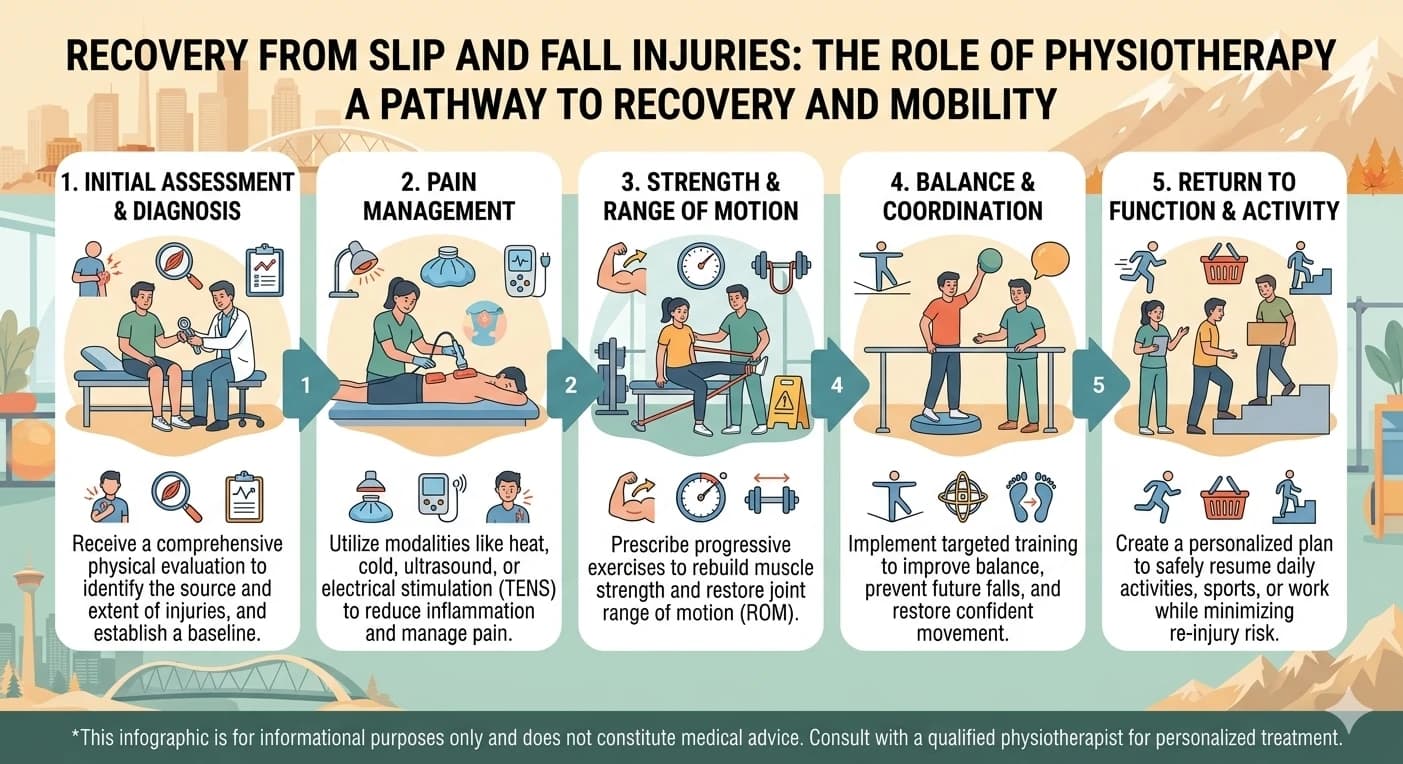
Every fracture is different, but recovery tends to follow similar stages.
Protection. Bone needs time and stability to knit together. This is the phase of casts, boots, slings, splints or surgical fixation. Your surgeon will tell you how much weight or movement is safe, and those instructions always come first.
Early movement. As soon as your care team allows, we gently restore motion in the joints around the injury. Nearby joints that are not in the cast, such as your fingers, elbow, shoulder or toes, can usually keep moving from day one.
Strengthening. Muscles weaken quickly when a limb is protected. Once the bone is stable, we rebuild strength in a graded way.
Return to function. The final stage focuses on real life: carrying groceries, climbing stairs, walking on uneven ground or getting back to sport.
Healing times vary with age, bone health, the type of break and whether surgery was needed. Anyone who gives you an exact date without seeing your case is guessing.
Wrist Fractures: Getting Your Hand Working Again
A wrist fracture is the classic result of reaching out to catch yourself. Many are treated with a cast or splint for roughly four to six weeks, while more complex breaks may need surgery with plates or pins.
While you are immobilized, the goal is to keep everything else moving. Open and close your fist, move your fingers fully, and bend and straighten your elbow and shoulder every day. Keep the hand raised above heart level to manage swelling. Stiff shoulders and swollen fingers are far easier to prevent than to fix.
Once the cast comes off, expect the wrist to look thin and feel stiff. This is normal. Physiotherapy usually starts with restoring wrist bending, straightening and forearm rotation, then moves on to grip strength, wrist stability and fine hand tasks. Many patients are surprised that turning a doorknob or opening a jar is their biggest hurdle at first.
Tell your care team promptly if you notice severe burning pain, skin colour or temperature changes, or swelling that seems out of proportion. These can occasionally point to a complication that needs early attention.
Ankle Fractures: Rebuilding Your Foundation
The ankle carries your whole body weight, so rehab here is closely tied to when you are allowed to put weight on it. Some people are non-weight-bearing for several weeks. Others progress to a walking boot sooner. Follow your surgeon's schedule exactly, even if the ankle feels okay.
When you are cleared to begin, we focus on:
- Reducing swelling, which can linger for months after an ankle fracture
- Restoring ankle movement, especially pulling the foot upward, which is essential for a normal walking pattern
- Retraining your gait so you stop limping out of habit
- Rebuilding calf, foot and hip strength
- Balance work, because the ankle's position sense is often disrupted after injury
Balance training matters more than people expect. An ankle that feels wobbly is more likely to roll again, and on a Calgary winter day that is a real concern. If you struggle with foot or arch discomfort as you get back on your feet, our team can also assess whether custom orthotics or a custom brace could help.
Hip Fractures: A Race Back to Independence
Hip fractures are the most serious of the three, especially for older adults. Most are repaired surgically, often within a day or two of the injury, and the medical team usually gets patients out of bed quickly. Early movement lowers the risk of complications such as blood clots, pneumonia and muscle loss.
Physiotherapy in the hospital often starts within a day of surgery. Early goals include sitting up, standing and taking first steps with a walker or crutches. After you go home, rehab builds on that foundation:
- Safe transfers, such as getting in and out of bed, chairs, the toilet and the car
- Walking practice, first with an aid and then without if appropriate
- Hip and leg strengthening, especially the muscles that stabilize your pelvis
- Stair practice and balance training
- Home safety advice, including rugs, lighting and bathroom set-up
Depending on the type of surgery, your surgeon may give hip precautions, which are movements to avoid for a period of time. Please follow them carefully.
A hip fracture is also a signal worth acting on. Ask your doctor about bone density and fall prevention, since a low-impact break can be a sign of osteoporosis. Treating bone health and improving balance together gives the best protection against another fall.
Why Rehab Is Worth Starting Early
People sometimes assume the fracture is "done" once the cast is off. In reality, that is often when the hardest work begins. Stiffness, weakness and fear of re-injury can quietly limit your life if they are ignored. A guided plan helps you progress at the right pace, avoids the common mistake of doing too much too soon, and gives you a clear picture of how far you have come.
At Spectrum, your physiotherapist will assess your movement, strength and balance, and work around your surgeon's guidance. We combine hands-on care, targeted exercise and plain-language education. You can read more about our post-fracture rehabilitation program and our prescriptive exercise services.
Frequently Asked Questions
When can I start physiotherapy after a fracture?
It depends on your injury and your surgeon's instructions. Some movement, such as exercising nearby joints, can often begin right away. Hands-on work and strengthening around the fracture usually start once the bone is stable. We can guide you on what is safe at each stage.
How long does it take to recover from a wrist, ankle or hip fracture?
Wrist fractures often take a few months to regain good function, and ankle fractures commonly take several months. Hip fracture recovery can take six months or longer. Age, health, bone quality and how closely you follow your plan all play a part.
Is it normal for my limb to be stiff and swollen after the cast comes off?
Yes. Stiffness, muscle loss and swelling are common and usually improve with movement and a structured exercise program. Contact your doctor if swelling is severe, if pain is increasing or if the skin looks red, hot or discoloured.
Will I need to use a walker or cane?
After hip and ankle fractures, many people use an aid for a time. Your physiotherapist will help you choose the right one and decide when it is safe to put it down.
Can I do exercises at home?
Yes, and home practice is a big part of recovery. We provide a program tailored to your stage of healing so you are not guessing about what is safe.
Do I need a referral to book at Spectrum Physiotherapy?
No referral is needed, and we offer direct billing for many insurance plans. If your fall happened at work, we also support WCB claims.
Ready to Get Moving Again?
A broken bone can feel like a setback, but with the right support most people return to the activities they love. If you are recovering from a wrist, ankle or hip fracture, book an assessment at our Country Hills, Nolan Hill or Forest Lawn clinic, or call 587-844-2040 to speak with our team.
This article is for general education and is not a substitute for personal medical advice. Always follow the instructions of your surgeon or physician.