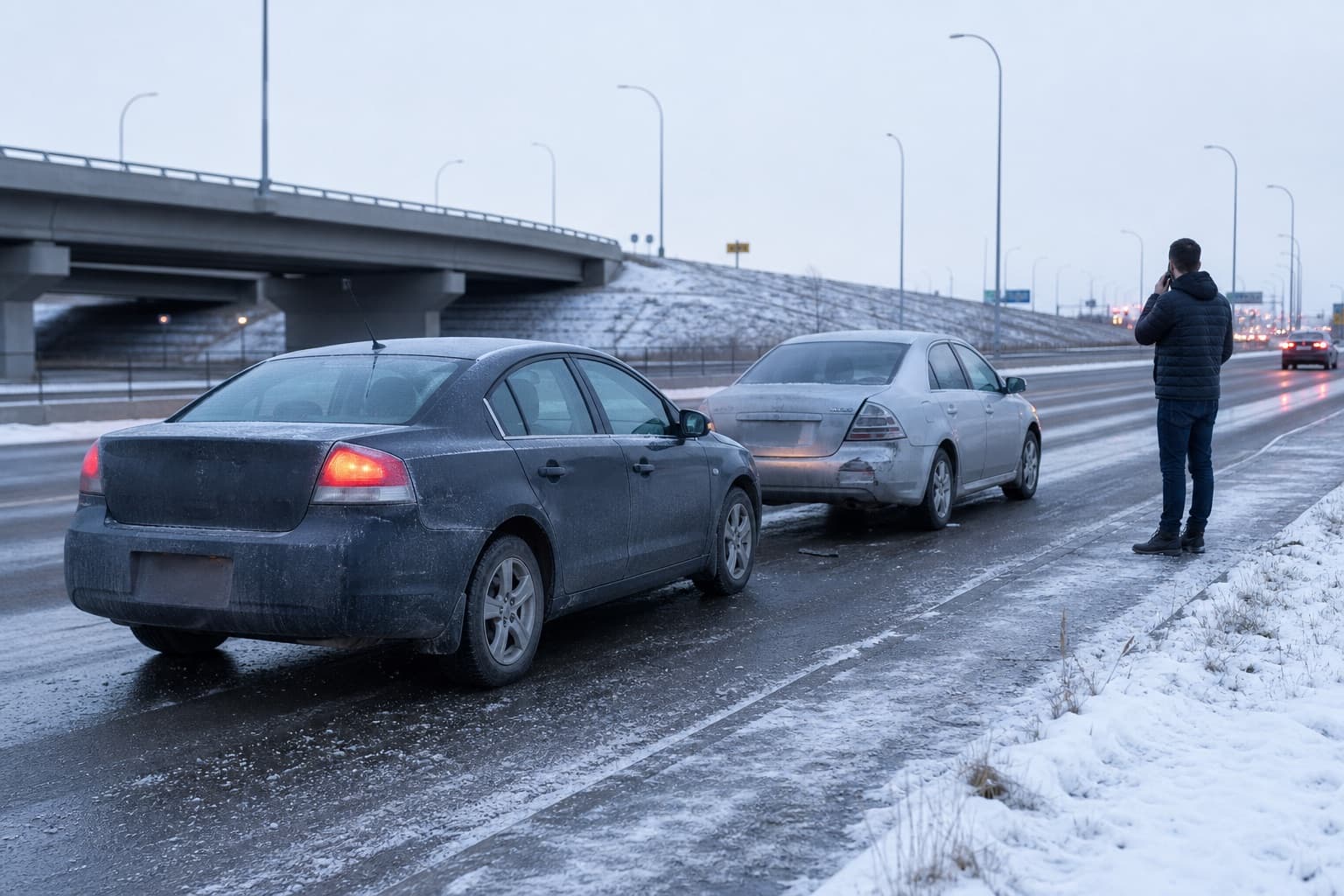
If you have lived through a Calgary winter, you know the moment. A chinook melts the snow at noon, the temperature drops by evening, and the parking lot turns into a sheet of glass. One wrong step and you are on the ground, quietly checking whether anyone saw you and whether anything hurts.
What you do over the next two days can shape how well you recover. Our physiotherapists see slip and fall injuries every winter, and the pattern is familiar. People either rush back to normal and make things worse, or they wait weeks in pain before getting help. This guide walks you through a calmer, safer approach.
First, Take a Breath and Check Yourself
Adrenaline can hide pain for a few minutes, so do not jump straight up. Stay where you are, if it is safe, and take stock. Can you move your fingers and toes? Do you feel dizzy, nauseous or confused? Is any part of your body suddenly misshapen, numb or too painful to touch?
If you feel steady, get up slowly. Roll to your side, push up onto your hands and knees, and rise one foot at a time. Use a wall, railing or car for support. If you are alone and cannot get up, call for help rather than forcing it.
Know When It Is an Emergency
Some injuries cannot wait for a clinic appointment. Call 911 or go to the nearest emergency department if you notice any of the following:
- You hit your head and lost consciousness, even briefly, or you feel confused, vomit repeatedly or have a worsening headache
- A limb looks bent or out of place, or you heard a crack and cannot put any weight on it
- Severe neck or back pain, or numbness, tingling or weakness in your arms or legs
- Chest pain, trouble breathing or severe abdominal pain after the fall
- Pain so intense that you cannot move the area at all
If you are unsure, Health Link (811) can help you decide how urgent your situation is. When in doubt, get checked. An X-ray that comes back clear is far better than a missed fracture.
Hours 0 to 24: Protect the Area and Settle Things Down
Once serious injuries are ruled out, the first day is about protecting the tissue and calming the area. Most clinicians now follow the PEACE and LOVE approach rather than the older "rest and ice" advice.
Protect. Avoid activities that increase pain for the first few days, but do not wrap yourself in cotton wool. Use a cane, crutch or brace if walking hurts.
Elevate and compress. Raise the injured limb when you can, and use a light compression bandage to control swelling. It should feel snug, never tight enough to cause numbness or tingling.
Be careful with ice and medication. A cold pack wrapped in a towel can ease pain for 10 to 15 minutes at a time. Current evidence suggests that very early anti-inflammatory medication may slow tissue healing, so check with your pharmacist or doctor about what is right for you.
Keep notes. Write down where and when you fell, what the surface was like and which areas hurt. If the fall happened at work, on a business property or on a poorly maintained walkway, these details matter for reports and claims. We also find they help us build a clearer picture during your assessment.
Hours 24 to 48: Start Moving, Gently
This is where many people go wrong in one of two directions. Some stay completely still because they are scared of hurting themselves again. Others push through pain to prove they are fine.
The sweet spot is gentle, pain-guided movement. Walk short distances around your home. Move the injured joint through a comfortable range several times a day. Mild discomfort is normal. Sharp, worsening or night-waking pain is your cue to slow down and get assessed.
Also watch for delayed symptoms. Bruising can appear a day or two later and spread downward with gravity, which is normal. But swelling that keeps growing, a joint that feels unstable, pins and needles, or headaches and dizziness that appear after a knock to the head all deserve a professional opinion.
The Injuries We See Most After Winter Falls
In our Calgary clinics, the usual suspects include:
- Ankle sprains and strains. Often mistaken for a minor twist, these can involve ligament tears that need proper rehab. Learn more about sprains and strains treatment.
- Wrist, hip and shoulder fractures. Reaching out to break a fall is instinctive and costly. Recovery after a cast or surgery is covered in our post-fracture rehabilitation program.
- Low back and tailbone pain. Landing hard on your backside can irritate joints, discs and muscles. See our back pain care.
- Knee injuries. Twisting on ice can strain ligaments and cartilage. Read about knee pain physiotherapy.
- Neck and shoulder pain. Whiplash-type strain can happen even in a simple fall.
- Concussion. You do not have to be knocked out to have one. Our concussion management program supports safe recovery and return to daily life.
How Physiotherapy Helps After a Fall
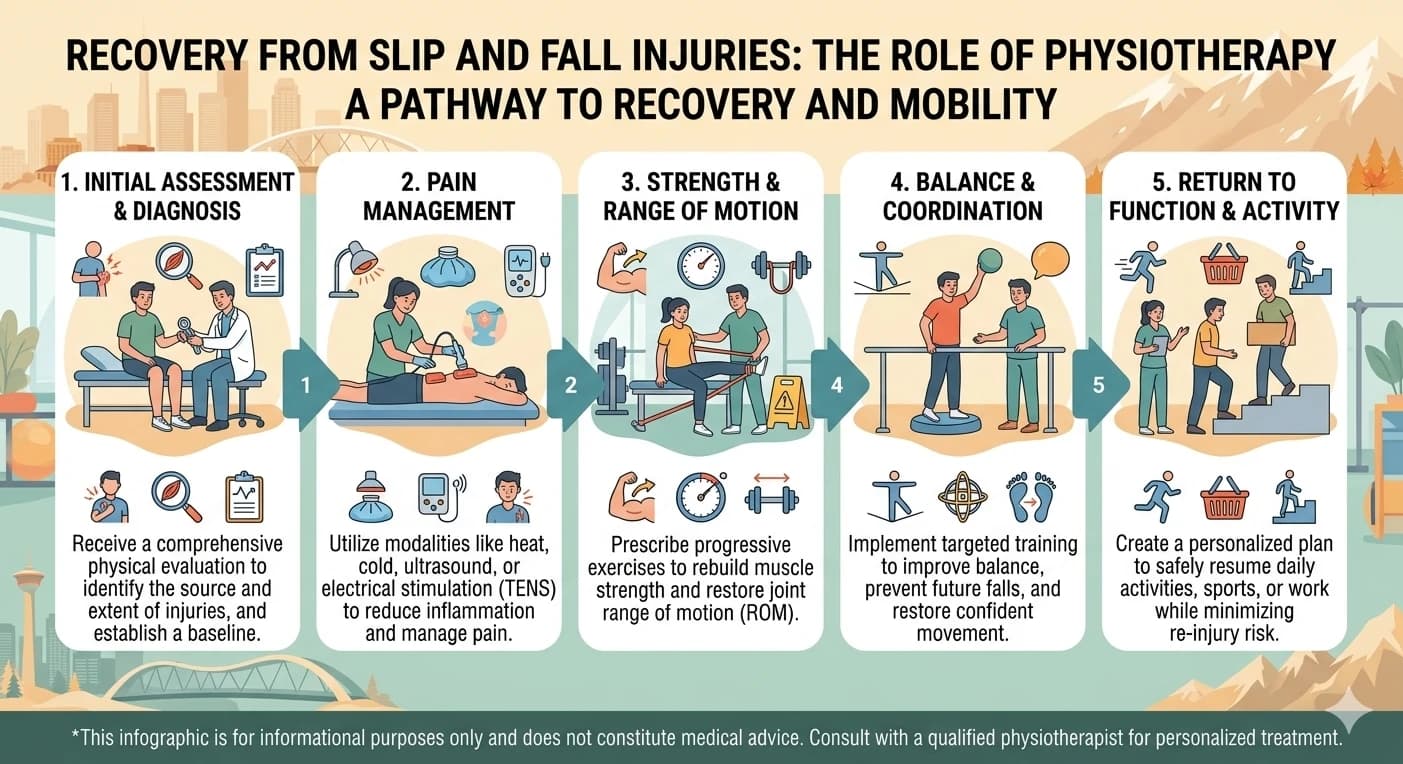
You do not need a referral to see us, and we offer direct billing for many insurance plans. At your first visit, your physiotherapist will listen to what happened, examine how you move and test strength, balance and joint stability. If something looks like it needs imaging or a physician's input, we will tell you plainly and point you in the right direction.
From there, treatment usually combines hands-on techniques, targeted exercises and clear guidance about what to do and avoid. Early physiotherapy can reduce stiffness, restore confidence in movement and lower the chance of a short-term injury turning into a long-term problem. That is especially true for older adults, for whom a fall can quickly lead to lost strength and fear of going outside.
Preventing the Next Fall
Once you have recovered, a few habits make a real difference. Wear footwear with deep tread and replace boots when the soles wear smooth. Take short, flat-footed steps on icy surfaces and keep your hands out of your pockets. Treat parkades, building entrances and train platforms with extra care, since melted snow refreezes there. Balance and leg strengthening exercises are among the most effective ways to reduce fall risk, and we are happy to build a plan around your goals.
Frequently Asked Questions
Should I see a physiotherapist or a doctor first after a fall?
If you have any emergency warning signs, such as a head injury, suspected fracture or numbness, see a doctor or go to the emergency department first. For pain, swelling and stiffness without red flags, a physiotherapist can assess you directly, and we will refer you on if you need imaging.
How do I know if my ankle is sprained or broken?
Inability to take four steps right after the injury, or pain directly over the bony points of the ankle or foot, suggests you should be checked for a fracture. Only an assessment and, if needed, an X-ray can confirm it.
Is it normal to feel sore for days after a fall?
Yes. Muscle soreness and bruising commonly peak at 24 to 72 hours. Pain that keeps worsening, or that stops you from sleeping or walking, is not something to wait out.
Can I use heat on my injury?
In the first day or two, heat can increase swelling in a freshly injured area. After that, gentle heat may help ease muscle tightness. If you are unsure, ask your physiotherapist.
How soon should I book an appointment?
Ideally within the first few days, once emergency causes are ruled out. Early assessment helps catch problems sooner and gets your recovery plan started.
Do I need a referral or insurance approval to book?
No referral is required at Spectrum Physiotherapy, and we can bill most insurance plans directly. If your fall happened at work, we also support WCB claims.
Hurt Yourself on the Ice? We Are Here to Help
A fall can leave you sore, shaken and unsure what is normal. You do not have to figure it out alone. Book an assessment at our Country Hills, Nolan Hill or Forest Lawn clinic, or call 587-844-2040 to speak with our team.
This article is for general education and is not a substitute for personal medical advice. If you think you have a serious injury, seek emergency care.