
You step off the curb, your boot hits a patch of black ice, and your foot rolls sideways. There is a sharp pain, maybe a pop, and within minutes the ankle starts to swell. Now you are sitting in your car or hobbling home with the same question on your mind: is this just a sprain, or is something broken?
It is one of the most common questions we hear in our Calgary clinics every winter, and it is a fair one. Sprains and fractures can look and feel remarkably alike. Both cause pain, swelling and bruising, and both can make walking difficult. The good news is that there are some reliable clues that help sort one from the other. This guide explains what those clues are, what a sprain actually is and what to do in the first couple of days.
A quick note before we begin. Only a proper assessment, and sometimes an X-ray, can tell you for certain what is going on. Think of this article as a way to understand your symptoms and make a sensible next move, not as a diagnosis.
What Is an Ankle Sprain?
A sprain is an injury to a ligament. Ligaments are strong bands of tissue that connect bone to bone and keep your ankle stable. When your foot rolls inward or outward beyond its normal range, those ligaments get stretched, and sometimes torn.
Most slip-on-ice sprains happen on the outer side of the ankle, where the ligaments are thinner and take the most strain when the foot rolls inward. Sprains are usually described in three grades:
- Grade 1. The ligament is stretched. You will have mild swelling and tenderness, and you can usually walk with some discomfort.
- Grade 2. The ligament is partially torn. Swelling and bruising are more obvious, walking is painful and the ankle may feel a little loose.
- Grade 3. The ligament is completely torn. There is significant swelling and bruising, and the ankle often feels unstable or gives way.
A grade 3 sprain can be just as painful and disabling as a fracture, which is why guessing based on pain alone does not work well.
What Is an Ankle Fracture?
A fracture is a break in a bone. In the ankle, this usually involves the bony bumps on either side of the joint, known as the malleoli, or other bones in the foot. Falls on ice are a classic cause, because your body weight and the twisting force combine to put heavy load through the joint.
Some fractures are obvious, with visible deformity or bone pushing against the skin. Others are subtle, such as a small crack at the base of the fifth metatarsal, the bone on the outer edge of your foot. People sometimes walk on these for days, assuming they have a stubborn sprain.
Clues That Point Toward a Fracture
Clinicians in Canada commonly use a set of guidelines called the Ottawa Ankle Rules to decide whether an X-ray is needed. In simple terms, an X-ray is usually recommended after an ankle injury if you have either of these:
- Bone tenderness at the back edge or tip of the bony bump on either side of the ankle, or at specific points on the foot, such as the base of the fifth metatarsal or the navicular bone on the inner midfoot
- Inability to take four steps right after the injury, and again when you are examined, even if you limp
Beyond those guidelines, other signs make a fracture more likely:
- You heard or felt a crack, rather than a pop
- The ankle looks crooked or misshapen
- Swelling and bruising developed very quickly and look severe
- You have numbness, tingling or a cold, pale foot
- Pressing on the bone itself, rather than the soft tissue around it, is very painful
- Pain is severe and does not ease with rest
Clues That Point Toward a Sprain
Sprains tend to be more tender over the soft tissue around the joint than directly on the bone. You can often put some weight on the foot, even if it hurts. Swelling builds gradually over several hours, and bruising may show up a day or two later, sometimes tracking down into the foot and toes.
Here is the catch. Many of these clues overlap, and some injuries involve both. It is entirely possible to sprain ligaments and chip a bone at the same time. A so-called high ankle sprain, which affects the ligaments above the joint, can also mimic a fracture and heal more slowly than a standard sprain. If you are unsure, getting it checked is the right call.
What to Do in the First 48 Hours
Whether it ends up being a sprain or a fracture, the early steps are similar.
Stop and protect it. Avoid pushing through pain. Use crutches, a cane or a supportive boot if walking hurts. If you suspect a fracture, keep weight off the foot until you have been seen.
Elevate and compress. Raise the foot above heart level when resting, and use a snug compression wrap. It should never cause numbness or colour changes in your toes.
Be thoughtful with ice and medication. A cold pack wrapped in a towel for 10 to 15 minutes can ease pain. Some evidence suggests that very early anti-inflammatory medication may slow tissue healing, so talk with your pharmacist or doctor about what suits you.
Move gently when you can. For a likely sprain, gentle pain-free movement within the first day or two supports healing better than complete rest. Simple ankle circles and writing the alphabet with your toes are good starting points.
When to Go to Emergency
Head to an emergency department or urgent care centre if the ankle is visibly deformed, if you cannot bear any weight at all, if your foot is numb, cold or pale, or if the skin is broken near the injury. Call Health Link at 811 if you are unsure how urgent your situation is.
How Physiotherapy Helps
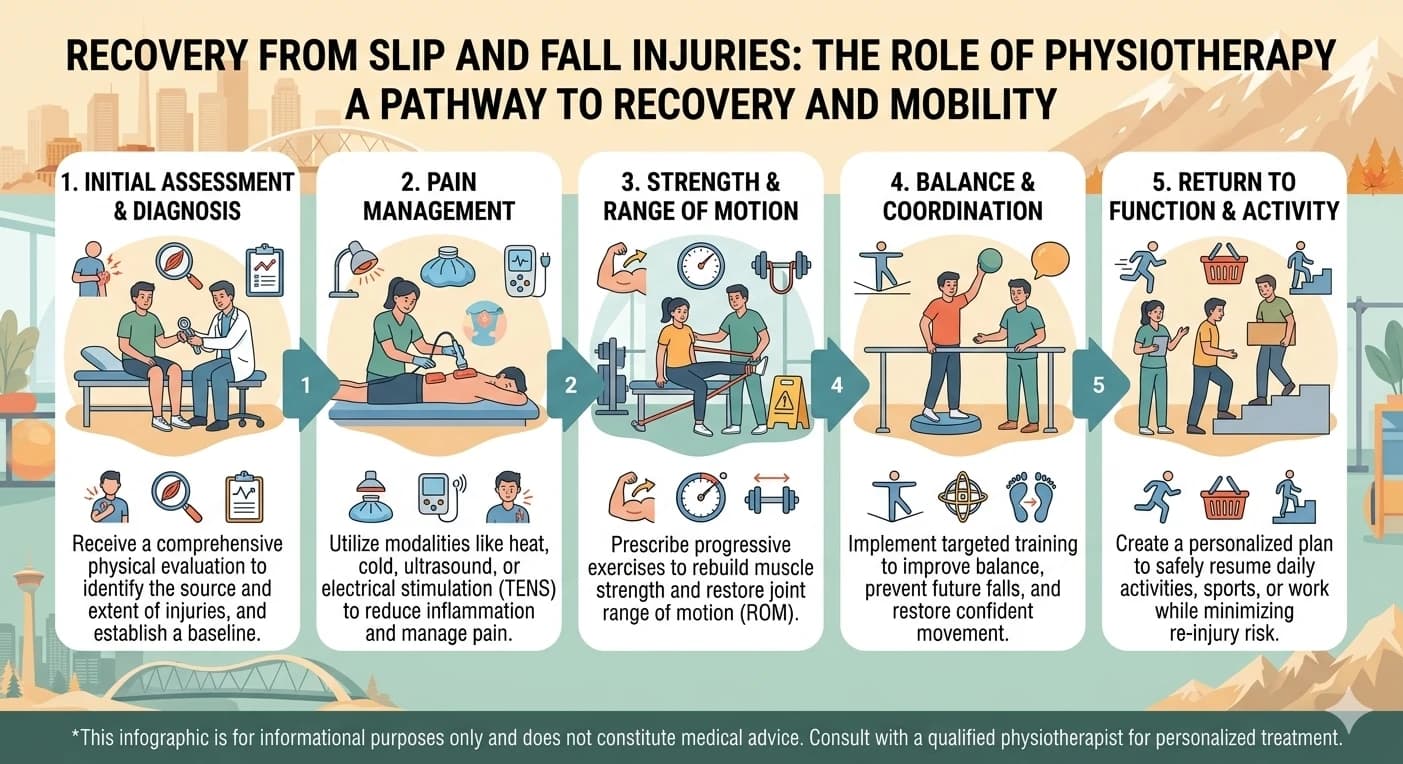
Once a fracture is ruled out, or once it has been properly treated, physiotherapy plays a big role in getting you back on your feet. At Spectrum Physiotherapy, we begin with a thorough assessment of how your ankle moves, how stable it feels and where it hurts. If something looks like it needs imaging, we will say so plainly and point you to the right place.
For sprains, treatment usually includes hands-on techniques to ease stiffness and swelling, guided exercises to restore movement and strength, and balance retraining. That last piece is often missed. After a sprain, the nerves that tell your brain where your ankle is in space can be disrupted, and that is one reason people go on to roll the same ankle again. Learn more about how we approach sprains and strains. If your injury does turn out to be a break, our post-fracture rehabilitation program can help you regain strength and confidence after the cast or boot comes off.
Some people also benefit from extra support during recovery, such as a custom brace or custom orthotics. Your physiotherapist can advise whether either makes sense for you.
Frequently Asked Questions
Can I walk on a broken ankle?
Sometimes, yes. Some people can walk on a fracture, particularly small ones, which is why being able to bear weight does not rule out a break. If you have bone tenderness, severe pain or you cannot manage four steps, get it assessed.
How long does an ankle sprain take to heal?
Mild sprains often settle in a couple of weeks, while moderate to severe sprains may take several weeks to months to feel fully normal. Recovery depends on the grade, your activity level and how well you follow a rehab plan.
Do I need an X-ray for every ankle injury?
No. Many sprains do not need imaging. A clinician can use the Ottawa Ankle Rules to decide whether an X-ray is worthwhile in your case.
Should I use heat or ice?
Ice can help with pain in the first day or two. Heat may feel good later on for stiffness, but avoid it on a freshly swollen ankle.
Why is my ankle still swollen weeks later?
Some swelling can linger for weeks or even months after an ankle injury, especially at the end of the day. If swelling is increasing, or if you have worsening pain, ask for a reassessment.
Do I need a referral to see a physiotherapist?
No referral is required at Spectrum Physiotherapy, and we offer direct billing for many insurance plans. If your fall happened at work, we also support WCB claims.
Not Sure What You Did to Your Ankle? Let Us Take a Look
A twisted ankle can feel confusing and frustrating, especially when winter keeps throwing icy surprises your way. You do not have to guess. Book an assessment at our Country Hills, Nolan Hill or Forest Lawn clinic, or call 587-844-2040 to speak with our team.
This article is for general education and is not a substitute for personal medical advice. If you think you have a serious injury, seek emergency care.