Picture a bluebird Saturday at Banff Sunshine or Lake Louise. You catch an edge, your board stops and your body keeps going. Without thinking, you throw out a hand to catch yourself. There is a flash of pain in your wrist, and just like that, your day on the hill is over.
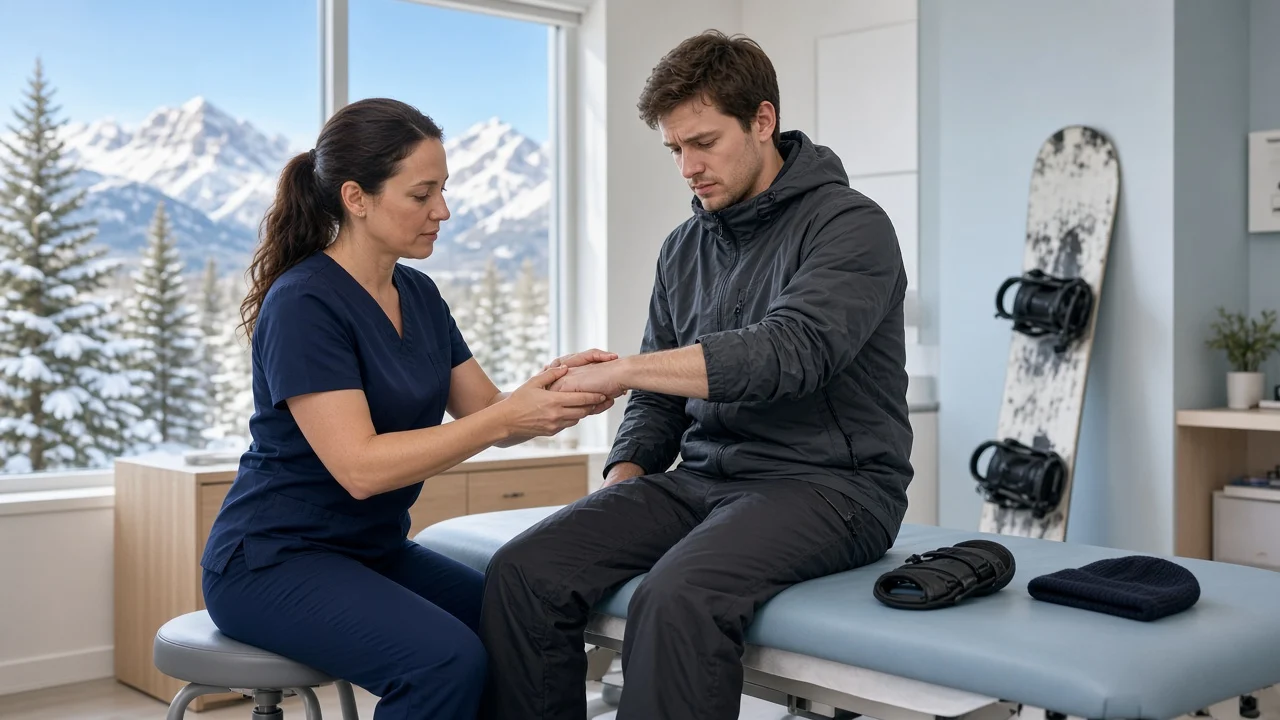
If that story sounds familiar, you have met a snowboarder's wrist. It is one of the most common injuries in the sport, and it is one of the reasons our sport injury physio team gets busy every winter. The good news is that many of these injuries can be prevented, and with the right rehab, most riders return to the slopes. This guide explains why the wrist takes such a beating, how to protect it and what recovery looks like.
Why Snowboarders Hurt Their Wrists
Snowboarding locks both feet to one board. When you start to fall, you cannot step out of it the way a skier might. Instinct takes over, and your outstretched hand becomes the brake. This is called a fall on an outstretched hand, and it sends the force of your whole body weight and speed through a joint that was never built to absorb it.
Beginners are hit the hardest. They fall more often, and they have not yet learned how to fall well. But experienced riders are not immune, especially in the park, in variable snow or on icy early-season runs. Fatigue late in the day also plays a role. Tired legs mean slower reactions and more awkward landings.
What Is Snowboarder's Wrist?
The term is not one single diagnosis. It describes a group of wrist injuries that commonly occur on the hill:
- Distal radius fracture. This is a break near the wrist end of the larger forearm bone, and it is the most common wrist fracture in snowboarding.
- Scaphoid fracture. The scaphoid is a small bone on the thumb side of the wrist. These can be easy to miss, because pain may feel like a mild sprain and early X-rays sometimes look normal.
- Ligament sprains and tears. Ligaments hold the small wrist bones together. Damage to them can cause pain, clicking and a sense that the wrist is unstable.
- TFCC injuries. The triangular fibrocartilage complex is a cushion on the pinky side of the wrist. Injuries here often cause pain when you twist, grip or lean weight through the hand.
Signs You Should Get It Checked
Not every sore wrist after a fall is serious. But please do not shrug it off if you notice any of these:
- Swelling or bruising that appears soon after the fall
- Pain at the base of the thumb, in the small hollow sometimes called the anatomical snuffbox
- A wrist that looks bent or misshapen
- Pain that is worse when you grip, twist or push through the hand
- Numbness or tingling in the fingers
- Pain that is still there after several days of rest
Seek emergency care for visible deformity, numbness that does not go away, a cold or pale hand, or an open wound near the injury. If you are unsure, an assessment and imaging are the safest route. A wrist fracture that goes untreated can heal poorly and cause long-term weakness or arthritis.
How to Prevent Snowboarder's Wrist
Prevention is where you have the most control. Here is what we recommend to our patients who ride.
Wear wrist guards. This is the single most helpful step, especially for beginners. Research has shown that wrist guards meaningfully reduce the risk of wrist injuries in snowboarders. Choose a pair with a rigid splint on the palm side, make sure they fit snugly and wear them under or over your gloves according to the manufacturer's directions.
Learn how to fall. It sounds odd, but falling is a skill. Try to keep your arms in front of your body, tuck your chin, relax and let your forearms, padded clothing or your backside take the impact rather than locking out your hands. Roll if you can. Many lessons teach this, and it is worth the time.
Take lessons early. Good coaching improves your balance, edge control and confidence, which means fewer falls to begin with.
Build strength before the season. A strong body absorbs impacts better. Focus on forearm and grip strength, shoulder stability, core and leg strength, and balance. Simple exercises like wrist curls with light weights, farmer carries, planks, squats, lunges and single-leg balance work can all help. Starting a few weeks before opening day makes a difference.
Warm up properly. Cold muscles and joints are less forgiving. Spend five to ten minutes on gentle movement before your first run, including wrist circles, arm swings and bodyweight squats.
Respect fatigue. Most injuries happen late in the day or when you are pushing past your limits. Call it a day when your legs start to wobble.
What Rehab Looks Like
The rehab plan depends on what you injured, whether surgery was needed and what your surgeon or physician advises. We always work within their instructions. In general, recovery follows these stages.
Stage one: protection. For a fracture or significant sprain, the wrist is often immobilized in a cast, splint or brace so the injury can begin to heal. Even then, you can usually keep your fingers, elbow and shoulder moving. This prevents unnecessary stiffness and swelling.
Stage two: regaining movement. Once you have the green light, we gently restore wrist bending, straightening and forearm rotation. Expect it to feel stiff and a little weak at first. Hands-on techniques, guided exercises and swelling management are all part of this stage.
Stage three: building strength. Grip, forearm and shoulder strength return gradually. We may use putty, light weights, resistance bands and weight-bearing exercises, always progressing at a pace your wrist can handle.
Stage four: returning to sport. Before heading back to the hill, you should have full or near-full movement, good strength and no pain with sport-specific tasks like pushing up from the snow, loading the wrist during a fall position and gripping a board. We often recommend a protective brace or guard as you return. Our team can discuss custom braces if extra support makes sense for you.
How long does it take? That depends on the injury. Minor sprains may settle in a few weeks, while fractures and ligament tears can take several months to feel fully normal. Rushing the process is the most common reason people re-injure themselves. A skilled sport injury physio can help you progress safely and keep your goals in sight.
How Spectrum Physiotherapy Can Help
Whether you are recovering from a wrist injury, hoping to prevent one or returning to sport after a break, our team can build a plan around you. We start by listening to how the injury happened and what you want to get back to. We then assess movement, strength and stability, and we explain what we find in plain language.
Treatment may include hands-on care, targeted exercise and education about protecting the wrist as you return to activity. You can learn more about our sprains and strains care, our post-fracture rehabilitation program and our prescriptive exercise services. No referral is needed, and we offer direct billing for many insurance plans.
Frequently Asked Questions
How do I know if my wrist is sprained or broken after a snowboarding fall?
Sprains and fractures can look and feel very similar. Severe pain, obvious deformity, pain at the base of the thumb or difficulty gripping all suggest you should be assessed and possibly imaged. Only an exam and an X-ray can confirm the difference.
Do wrist guards really work?
Yes. Studies in snowboarders show that wrist guards lower the risk of wrist injuries, particularly for beginners. They are not a guarantee, but they are one of the easiest and most effective protections available.
Can I snowboard with a sore wrist?
It is best not to. Riding on an injured wrist increases the risk of a worse injury. Get it checked first, and return only when you have regained movement and strength.
How long will I be off the hill?
It depends on the injury. Mild sprains may need a few weeks, while fractures and ligament injuries can take several months. Your surgeon or physiotherapist can give you a timeline based on your situation.
What is a scaphoid fracture and why is it a concern?
The scaphoid is a small wrist bone with a limited blood supply. If a fracture is missed or poorly treated, it may heal slowly or not at all. If you have thumb-side wrist pain after a fall, do not wait it out.
Do I need a referral to see a sports injury physio at Spectrum?
No. You can book directly at our Country Hills, Nolan Hill or Forest Lawn clinic. If your injury happened at work, we also support WCB claims.
Ready to Get Back on the Board?
A wrist injury can feel like the end of your season, but with the right care it does not have to be. If you are recovering from a fall or want to protect your wrists before the next big dump, book an assessment with our team, or call 587-844-2040.
This article is for general education and is not a substitute for personal medical advice. If you think you have a serious injury, seek emergency care.